Read a route, not just a number
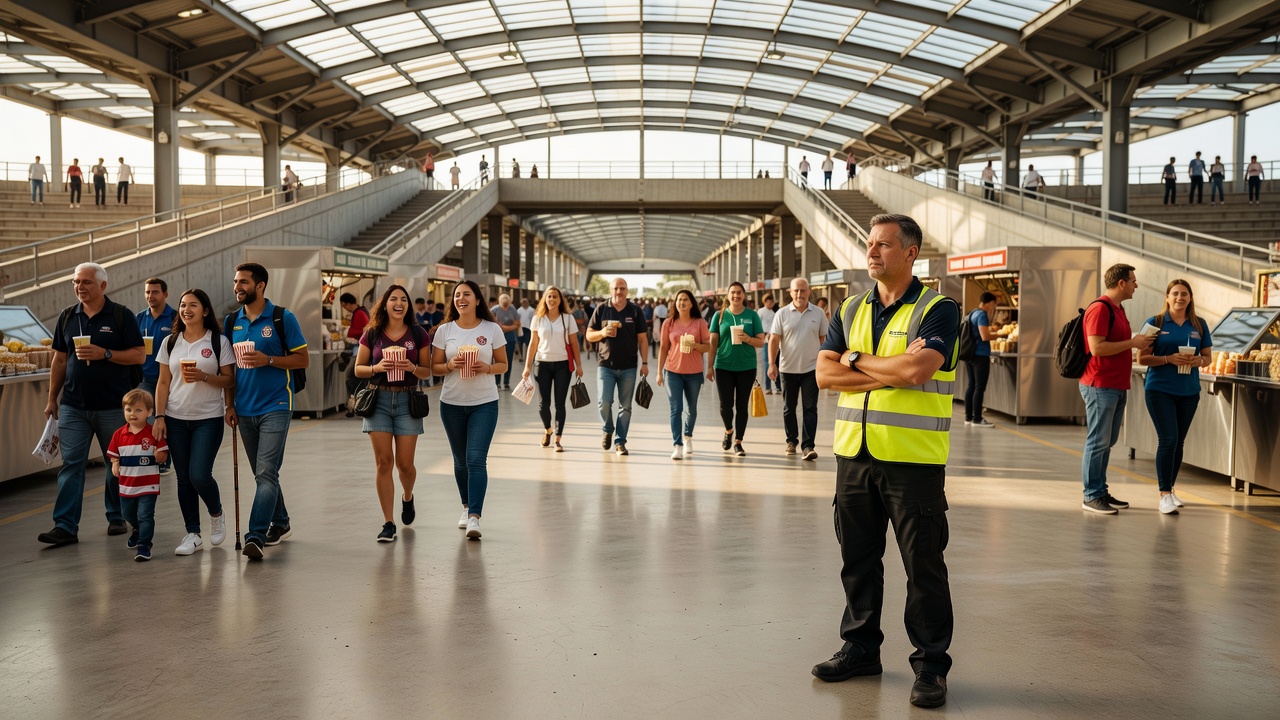
People arrive in waves, pause to meet companions, stop to check directions and move at different speeds. A concourse that looks quiet in one instant may soon fill as a train arrives or a match interval begins. Movement analysis attempts to describe such change over time. Depending on the system, it may estimate direction, speed, density or the rate at which people pass a defined point. These measures are related, but they are not interchangeable.
Flow is usually a rate of movement through a boundary during a stated interval. Density describes how closely people occupy a measured area. Speed can vary as visitors walk, queue, pause or make room for others. An aggregate estimate can reveal a trend for staff to investigate; it cannot explain every cause. A temporary pause might result from a queue, a conversation, a mobility need, a closed door or a route obstruction. Context matters.
Define the operational question first
Before choosing a tool, a venue should say what decision it hopes to support. Is the team trying to understand interval dispersal, compare two signed routes, identify recurring service bottlenecks or improve accessible movement between a gate and seating? A precise question discourages broad collection without a clear purpose. It also helps decide what area to measure, when to measure it and what level of detail is actually useful.
Draw the route as a sequence of meaningful places: approach, entry search, ticket check, internal concourse, stair or lift, seating section, service point and exit. Each transition has its own constraints. A gate arrival rate, for example, does not tell the team whether the internal route beyond it has capacity. Likewise, a count at a stair landing cannot by itself establish that the stair is safe to use. Put boundaries and periods beside every measure so staff can understand exactly what it represents.
Combine evidence with direct observation
AI-supported analysis may use counts from sensors, operational records or aggregated image measurements. The design should minimize personal data and should avoid collecting identifying detail unless a specific, lawful and justified need exists. A useful movement view can often rely on anonymous totals and direction estimates. Avoid presenting a person-level trail when a zone-level summary would answer the operational question.
Teams should compare digital indicators with steward observations, radio messages, ticketing events, door status and planned activities. A change in estimated flow may coincide with a concession opening, a delayed start or a transport disruption. The correlation can point to a question, but it does not prove a cause. A named operator should check whether sensors are positioned correctly, time data agree, and the location is being interpreted in the right operational context.
Make the response proportionate
Possible responses might include opening a staffed alternative route, adjusting a sign, changing a queue layout, pausing a release under established procedures or sending a steward to verify conditions. The right response depends on local plans, training and live circumstances. It should never be selected solely because an algorithm displays a threshold. If an alert arrives late, is based on incomplete inputs or conflicts with what staff see, the discrepancy itself needs investigation.
Good practice includes clear alert ownership, a way to acknowledge and challenge an indicator, sensible escalation, and a record of what was observed and done. Staff should know which control-room role can approve a change and how to communicate it to colleagues and visitors. An interface that adds noise, obscures uncertainty or encourages overreaction can make a busy event harder to manage.
Respect the people using the route
Movement is not simply a throughput problem. Visitors may need extra time, space or assistance; families may regroup; people may choose a quieter route. An operational plan should preserve dignified choices and accessible alternatives rather than treating slower movement as an error. Clear signs, trained stewards and an understandable route often matter as much as sophisticated analytics.
Review the system after events of different sizes and conditions. Ask whether the indicator was timely, whether staff understood it, whether a response improved the experience, and whether the data gathered were necessary. Record uncertainty and known blind spots. The purpose is learning and practical support, not a claim that a model can predict every crowd condition.
Use a disciplined gate-to-exit process
Establish the route and question
Mark boundaries, time periods, accessible alternatives and the decision the information is meant to inform.
Check the signal
Confirm sensor status and compare the indicator with staff reports and other operational records.
Assign a human decision-maker
Use the venue's command structure, risk assessment and communication plan to choose an action.
Learn and limit
Review outcomes, retain only necessary records and revise the system when it creates confusion or inequity.
Well-run movement analysis is modest in its claims and specific in its purpose. It gives venue teams another source of evidence, while leaving interpretation, safety authority and care for the public with people.